Change isn't new to Richmond, and more change is coming.
The two timelines below tell that story: one shows how Richmond's economy has always changed over time, and the other highlights recent plans, projects, and milestones building toward a just transition now.
Richmond has been shaped by major economic transitions for thousands of years, from Ohlone economies rooted in land, water, and trade to colonization, ranching, railroads, oil refining, wartime shipbuilding, suburbanization, disinvestment, and service-sector work. Each transition transformed the city, often bringing opportunity for some while deepening harm for others through land theft, racial exclusion, pollution, displacement, and economic instability.
Read more
Today, Richmond faces another defining transition: moving beyond fossil fuel dependence toward a just, sustainable, and community-centered economy. This timeline connects Richmond's past economic shifts with recent transition milestones, plans, and projects that are helping shape the city's future.
Richmond's economy has never stood still. For thousands of years, Ohlone people sustained local economies through harvesting, fishing, hunting, and trade before colonization violently disrupted Indigenous life, land, and culture. Since then, Richmond has experienced repeated economic transformations: from colonial ranching to railroads, refineries, agriculture, explosives, and wine production; from the World War II shipbuilding boom to postwar disinvestment, suburbanization, and the rise of low-wage service work.
These transitions brought growth and opportunity for some, while also causing deep harm through land theft, racial exclusion, incarceration, pollution, displacement, and economic abandonment. Today, Richmond is entering another major transition: moving away from dependence on fossil fuels and toward a more just, sustainable, and community-rooted economy. This timeline traces Richmond's past economic shifts alongside recent just-transition milestones, plans, and projects that point toward a healthier and more equitable future.
Changing Economies
Richmond has been an Ohlone shoreline, mission territory, a railroad and refinery town, a wartime boomtown, and a city left to live with the consequences of each transformation — long before "just transition" had a name.
Ohlone Economy
For thousands of years, Ohlone people cared for the shoreline, marshes, and hills that became Richmond — fishing, gathering, making goods, and trading throughout the Bay Area.
Read more
People have been living in and around Richmond, and therefore have had a local economy, going back at least 5,000 years. Ohlone people harvested "an astounding variety of seeds, nuts, fruits, and bulbs" and hunted and fished. They had extensive trade networks through which they obtained obsidian, bows, tobacco, basketry materials, and pigments for painting. But the intentional erasure of Ohlone language, culture, and ways of organizing society makes knowledge of their economies extremely limited — and also brought about the earliest known economic transition.
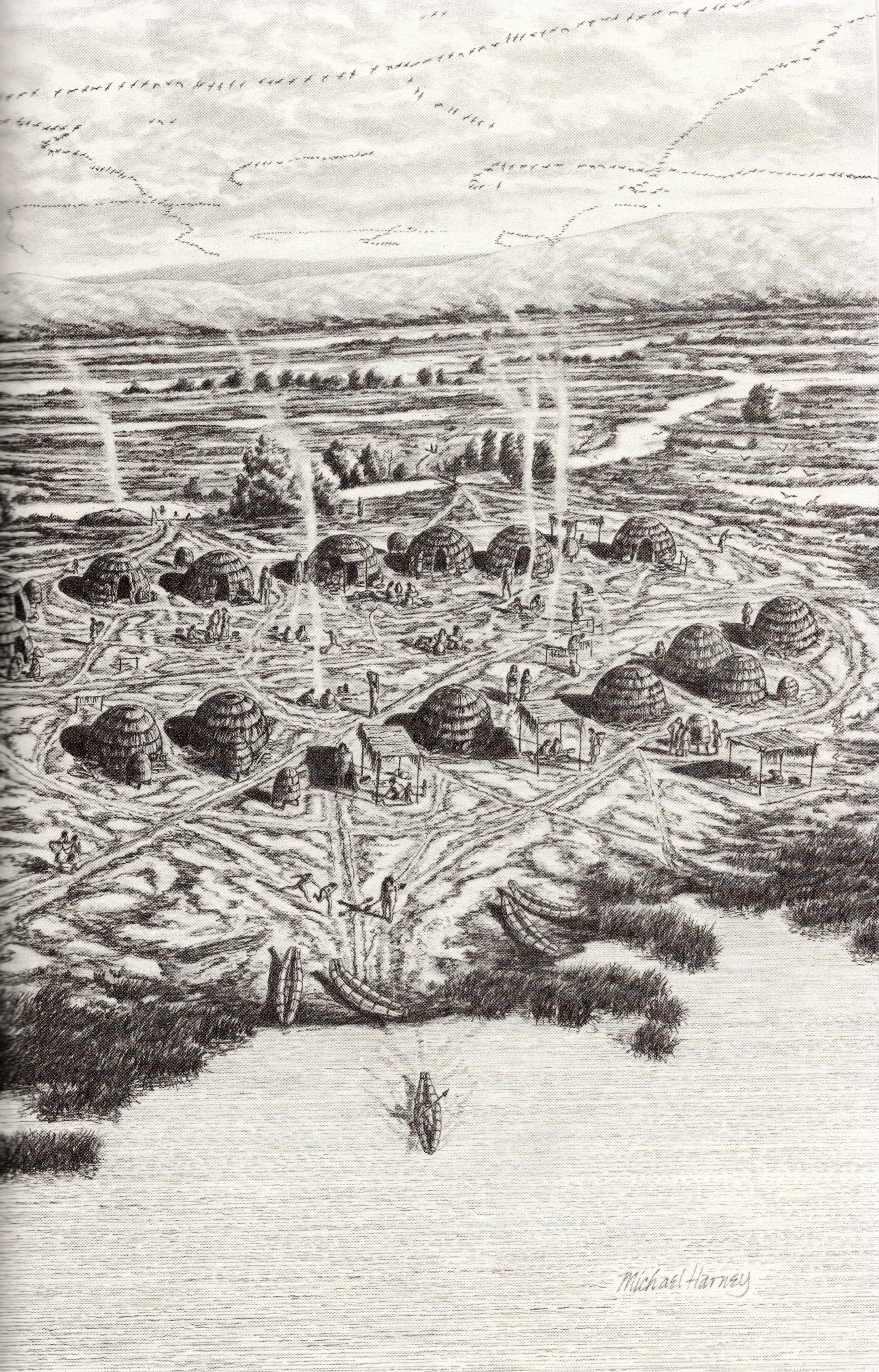
Land stolen, Ohlone economies and ways of life disrupted
Colonization & Spanish Missions
Spanish colonization and the mission system forcibly displaced Ohlone people from their land and labor, breaking existing economies and land stewardship.
Read more
The transition from a long-standing subsistence economy in Richmond started the day the Ohlone people first met colonizing Europeans, on March 28th, 1772. A group of 14 Spanish soldiers on horseback arrived at a small town on San Pablo Creek. According to the journal written by the Spanish record-keeper, a group of Ohlone people were processing Brodieia bulbs and soaproot to eat. Over the next six decades, the Spanish established missions and attempted to replace Ohlone culture with their own through violence, assimilation, religious indoctrination, and kidnapping and enslaving children. An Ohlone woman named Maria Colos was interviewed around 1904 and described a past kidnapping: "a wagon filled with Indian children coming from Martinez… they were bringing them like animals… They wanted some water to drink. They were naked." In 1883, ownership of Richmond was given by the Mexican government to Francisco Castro, a Spanish soldier stationed in California.
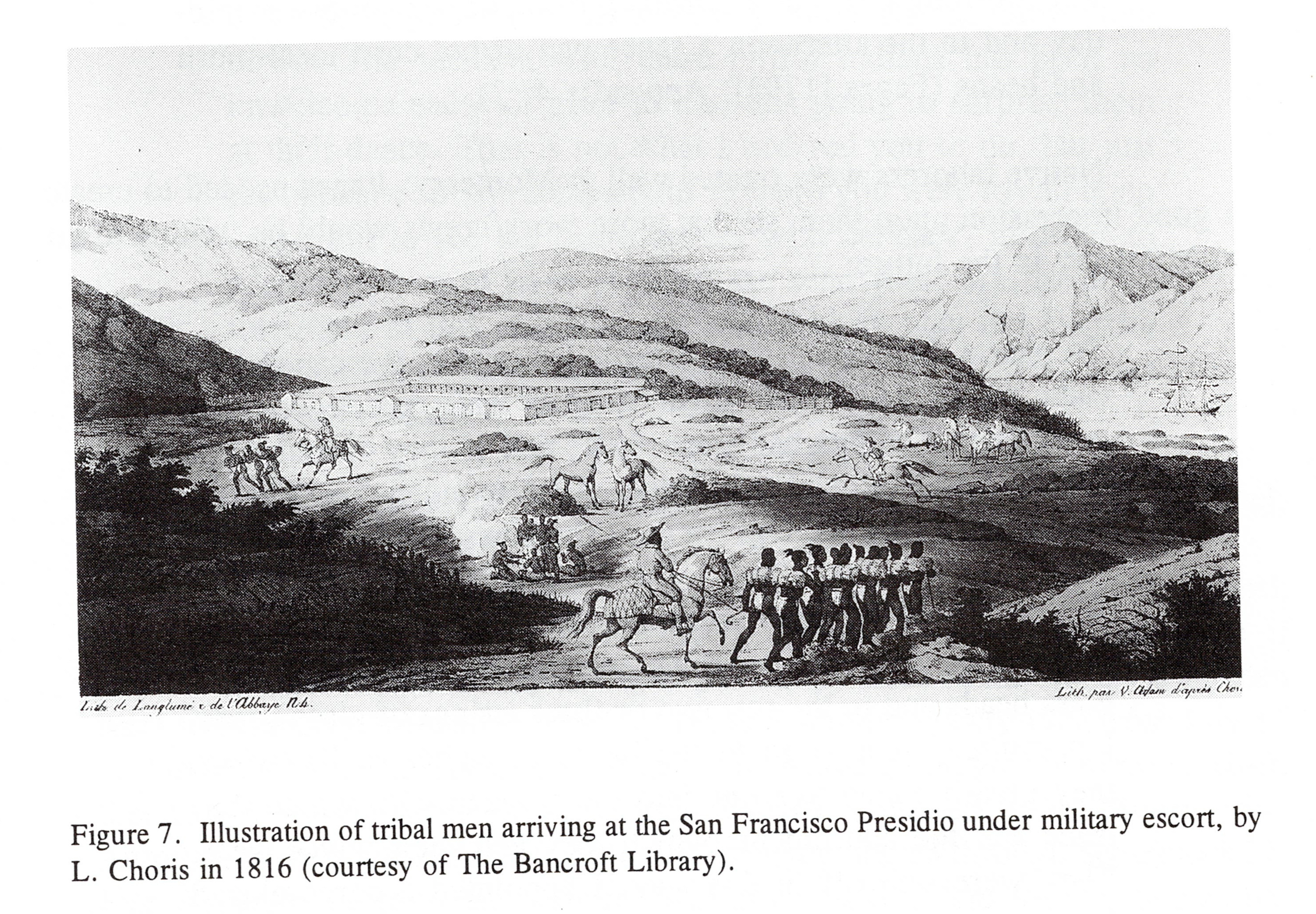
Mission economy collapses, industry rushes in
Industrial Founding: Railroads & Refinery
The Santa Fe Railway's most western stop and Standard Oil's 1902 refinery turn Richmond into an industrial town almost overnight.
Read more
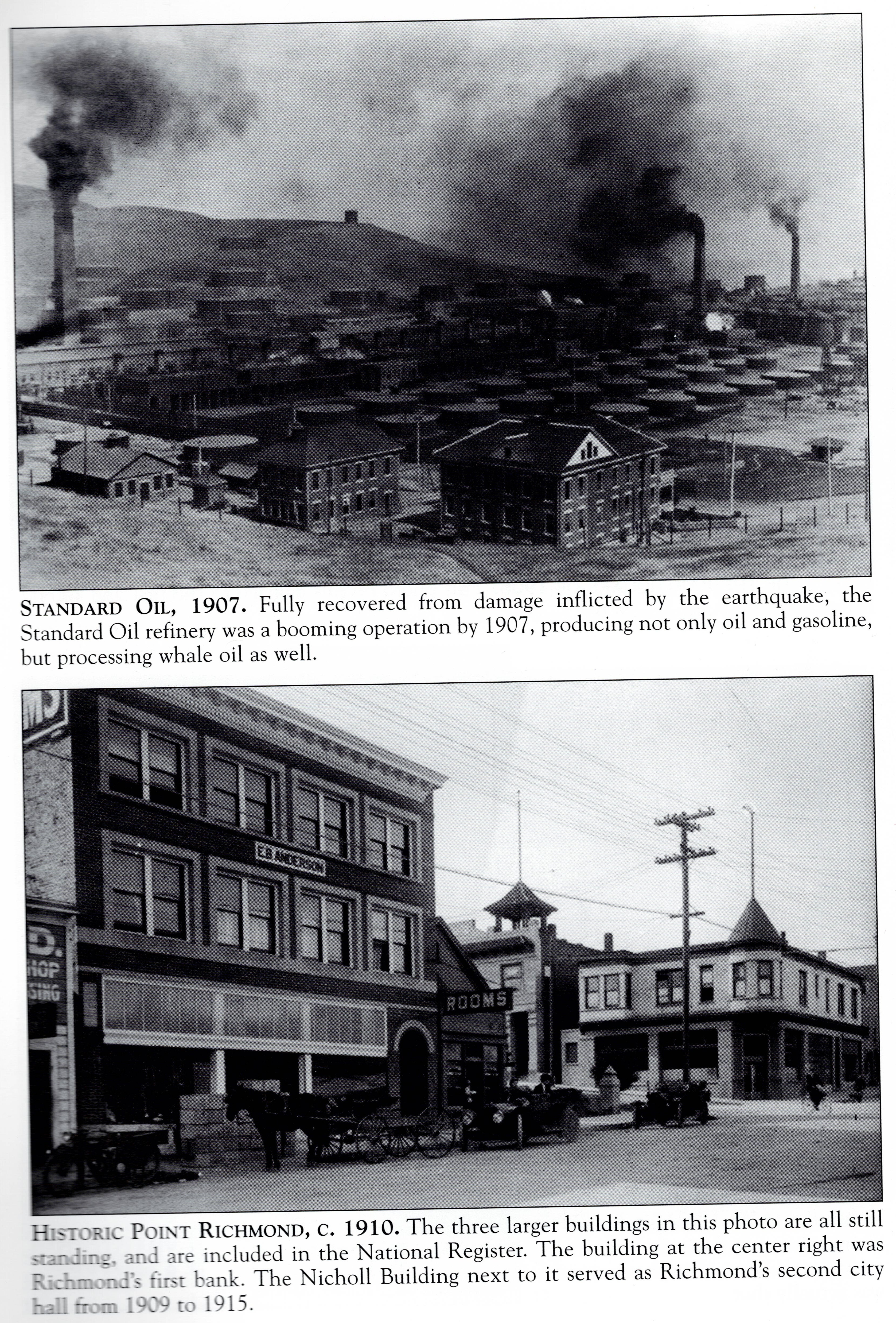
A second economic transition came about when Richmond's economy shifted away from colonial ranches to settler industries. Chinese and other workers laid the final tracks of the transcontinental railroad in Point Richmond in 1869. The large marsh on the eastern side of Point Richmond was filled in, and the Standard Oil refinery was established in 1901. What would become the largest winery in California at the time, Winehaven, was built. The largest dynamite manufacturer in the US, the Giant Powder Company, moved its operations to what is now Point Pinole Park. Richmond also had thriving agricultural businesses in the early 1900s and became a hub for flower cultivation. Richmond officially incorporated as a city in 1905.
Wartime demand quadruples the population overnight through the Great Migration
WWII Shipbuilding Boom
Kaiser Shipyards bring a wartime population boom, recruiting waves of Black workers from across the country to build ships around the clock.
Read more
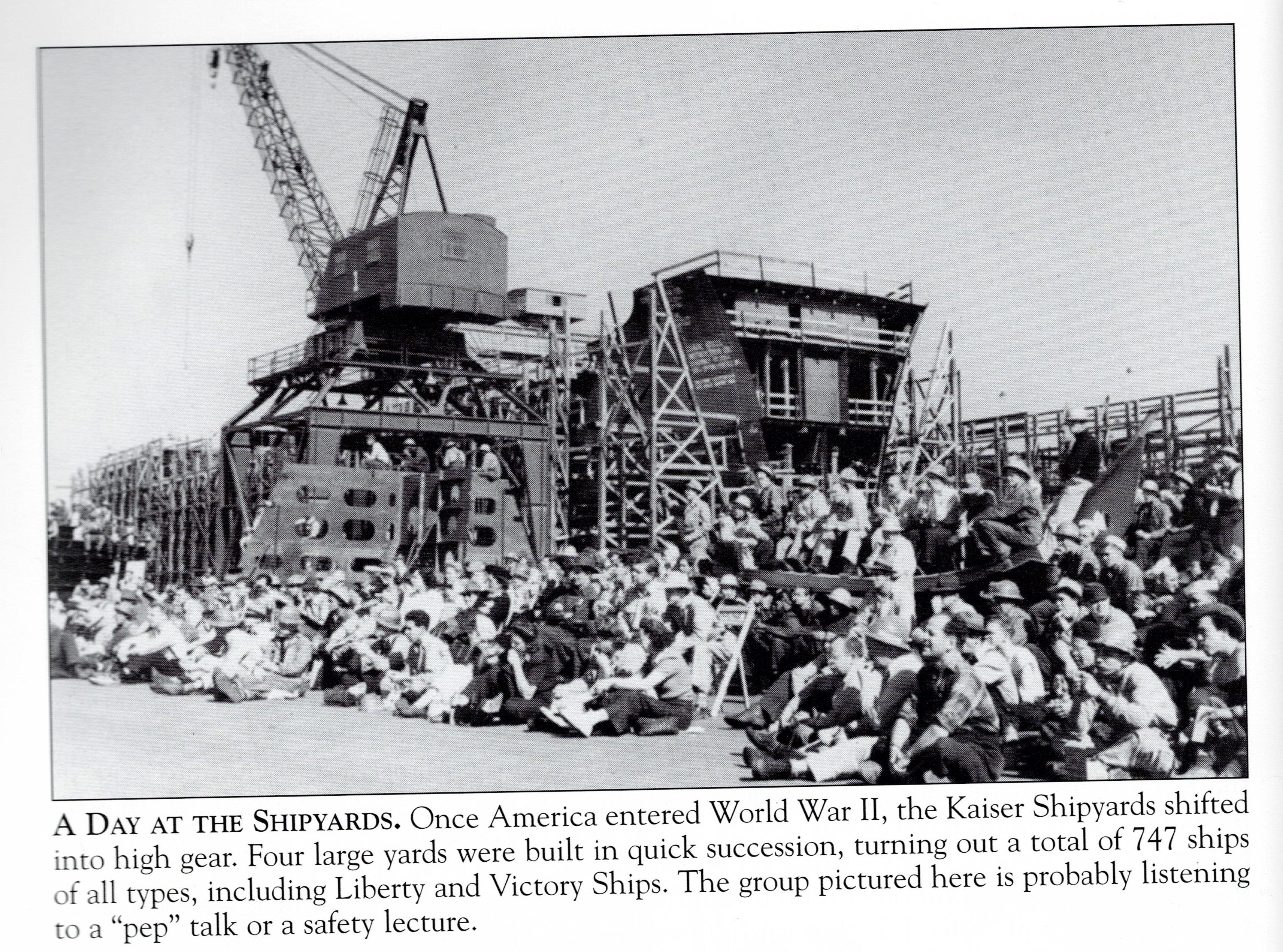
In the 1940s, Richmond went through its most famous economic transition — the shipbuilding boom facilitated by federal spending for World War II. The Kaiser Shipbuilding Corporation had an out-of-state recruitment program that aimed to secure 150 new workers per week for its yards in Richmond. In the decade of the 1940s, the city's population quadrupled from 23,000 to nearly 100,000. This included the arrival of African Americans to Richmond, who, according to the 1940 US Census, numbered 270, and by 1950, were 13,374. African Americans brought traditions that shaped the local economy, including midwifery, a thriving music scene, social clubs, sports, and crops and foods from the South.
Racial violence, redlining, discrimination by realtors and banks, and other forms of racial exclusion and dispossession controlled the access of African Americans and other people of color to work, homes, land, financing, and other essentials for economic well-being. Japanese Americans in Richmond, who had built up much of the flower-growing industry, were rounded up by the federal government and incarcerated in internment camps for several years. Many came home to their properties having been taken or damaged.
Jobs vanish as shipyards close and suburbs draw residents out of the city
Post-Wartime Decline & Suburbanization
Shipyards close, jobs and white residents move to new suburbs, and Richmond's tax base and job center hollow out.
Read more
The economic transition following World War II was one of economic decline and abandonment, as federal funding for shipbuilding was withdrawn, manufacturers moved out of Richmond to whites-only areas like Milpitas, and many white Richmond residents took advantage of subsidized suburban development and moved out of the city. In 1950, Richmond had 80,000 white residents, and within a decade that number had fallen to 56,000, while the African American population had increased slightly.
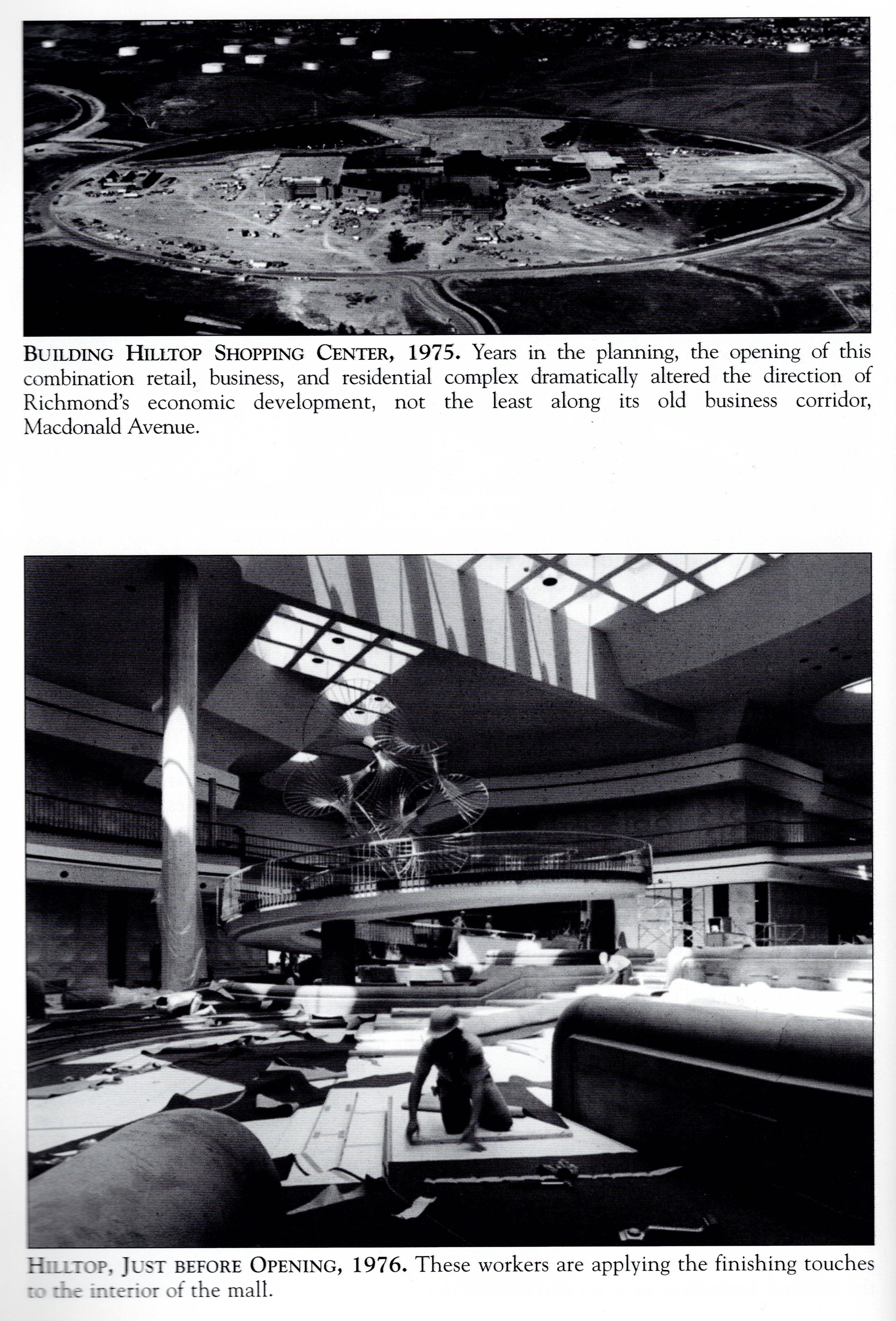
The new economy was one of suburbanization — where public infrastructure and business development prioritized automobile use and the needs of commuters passing through Richmond. The 580 freeway connecting I-80 to the Richmond-San Rafael Bridge was built, as was the Richmond Parkway. Hilltop Mall was developed, and many of the businesses in downtown Richmond moved to the mall or closed. This economic transition replaced higher-wage industrial jobs with low-wage retail and service jobs. Tax policy changes made by Proposition 13 in 1978, and other policies, gutted local public funds, undermining city services and public schools.
Disinvestment turns into policing and prisons
Mass Incarceration Era
Disinvestment, over-policing, and the war on drugs drive decades of incarceration concentrated in Richmond's Black and Latino neighborhoods.
Read more
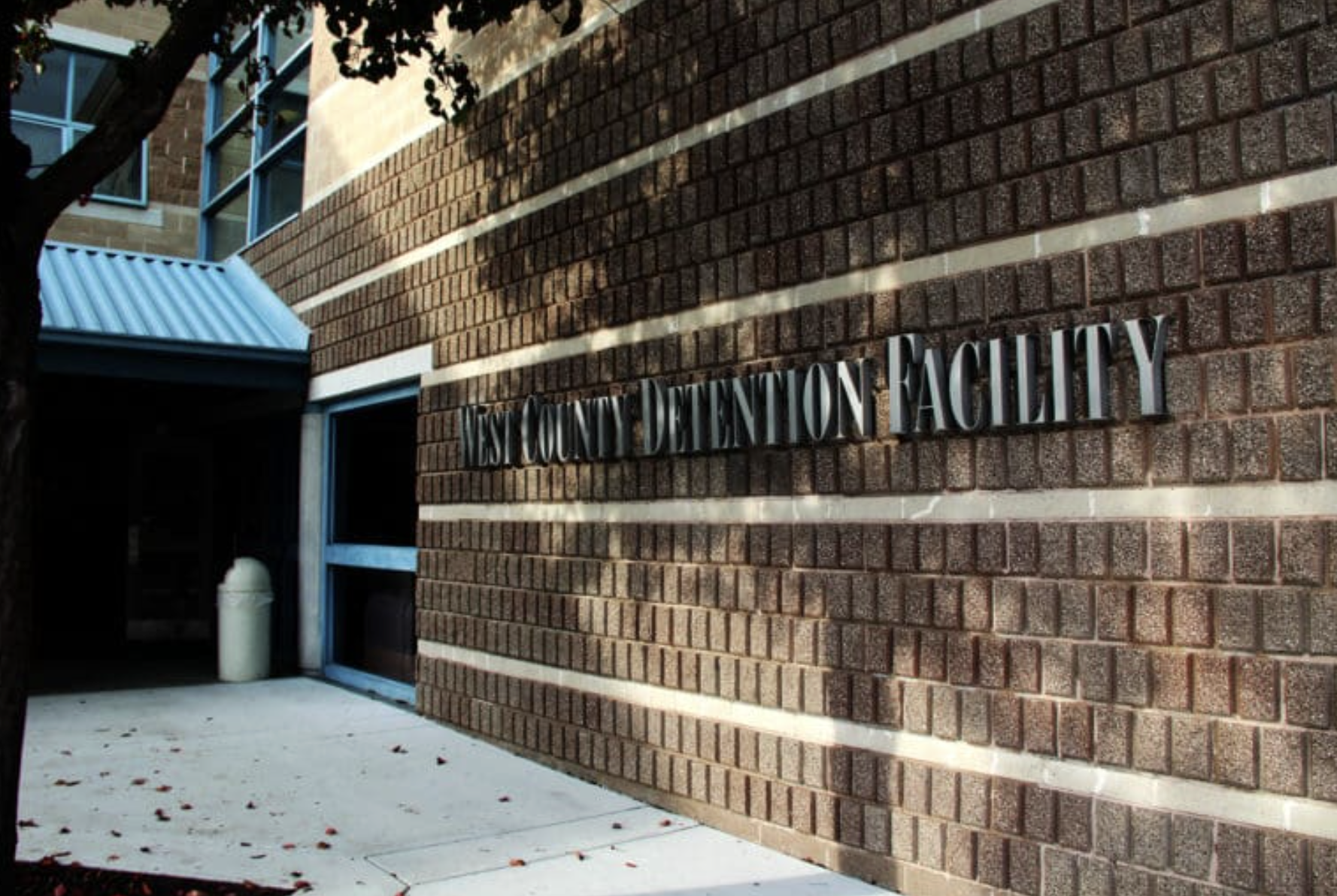
The impact of mass incarceration and the influx of drugs and guns in the 1980s and 1990s had a devastating effect on Richmond's local economy. The racist effect of mass incarceration resulted in more African American adults in prison, jail, or on probation or parole than were enslaved in 1850, a decade before the Civil War began, according to Michelle Alexander. The incarceration of Black men was so extreme that by 2002, there were "nearly 3 million more black adult women than men in black communities across the United States, a gender gap of 26 percent." The economic impact of this trauma and lost time included losses in formal education, career development, growth of businesses, social networks, mentorship, and other key factors for economic well-being.
Organizing on our own terms to plan the next transition
Towards a Just Transition
Richmond organizes — through policy, campaigns, coalition, and planning — to shape what comes after the refinery on its own terms.
Read more
In the last 20 years, Richmond has embarked on another economic transition: one focused on a more just and sustainable economy. The city has stood out nationally in its efforts to train people to access green jobs, prevent foreclosures, protect tenants, end over-policing, and support people returning from incarceration, ensure economic development has equitable benefits, and shift toward renewable energy. This transition is still in progress, but its champions see the present as a pivotal moment to scale up progress.
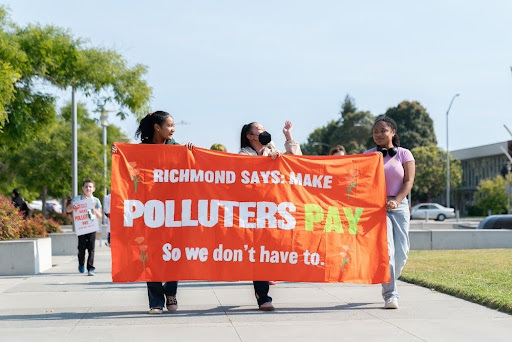
That history leads directly into what's happening right now — the plans, projects, and milestones building toward Richmond's just transition today.
Richmond’s Just Transition Timeline
For decades, Richmond residents, organizers, workers, and local leaders have been shaping a future with cleaner air, good jobs, healthier neighborhoods, and more community power.
This timeline highlights some of the key projects, policies, campaigns, and milestones that have helped move that work forward.
- Governance2006Richmond elects Gayle McLaughlinRichmond voters elect Gayle McLaughlin, the first Green Party mayor of a U.S. city of its size.
- Policy2006Richmond adopts a local hiring policyThe City adopts a local hire policy to help more Richmond residents access local jobs.
- Green Jobs2006Solar Richmond launchesSolar Richmond launches as one of the country’s first green jobs programs, connecting residents to solar training and careers.
- Food Access2009California Market Match launchesCalifornia Market Match begins helping low-income residents stretch their food dollars and buy more fresh produce.
- Infrastructure2010Richmond becomes a solar leaderRichmond is recognized for having the most solar power per person of any large city in California.
- Mobility2011Richmond plans for safer walking and bikingRichmond publishes its Pedestrian Plan and Bike Master Plan to make it safer and easier to get around without a car.
- Environment2012A massive fire hits the Chevron refineryA major fire at the Chevron Richmond refinery sends smoke across the community, following earlier refinery fires in 1989 and 1999.
- Justice2012Richmond residents push for people, not prisonsThe Invest in People, Not Prisons campaign helps stop a county jail expansion and redirect investment toward jobs, housing, and services.
- Community Plan2012Richmond adopts its General PlanCity Council adopts the Richmond General Plan, setting a long-term vision for the city’s growth and future.
- Health2012Richmond puts health equity into its General PlanRichmond becomes one of the first U.S. cities to include a Community Health and Wellness Element in its General Plan.
- Partnership2012Richmond partners to advance health equityThe Richmond Health Equity Partnership forms to help put the city’s Community Health and Wellness Element into action.
- Energy2013Richmond shifts toward renewable electricityRichmond joins Marin Clean Energy, giving residents and businesses access to cleaner electricity.
- Policy2013Richmond adopts Ban the BoxRichmond adopts a Ban the Box policy to reduce employment barriers for people with past convictions.
- Housing2013Richmond takes on the foreclosure crisisRichmond adopts a policy to consider using eminent domain to protect homeowners facing foreclosure.
- Policy2014Richmond adopts Health in All PoliciesRichmond adopts its Health in All Policies ordinance, bringing health and equity into decision-making across city government.
- Community Plan2016Rise Up Richmond plans for equitable developmentThe Rise Up Richmond coalition develops a community plan for making major new development benefit local residents.
- Housing2016Richmond strengthens tenant protectionsRichmond adopts rent control and Just Cause for Eviction protections to help tenants stay in their homes.
- Mapping2016Richmond maps where climate investments can do the most goodRichmond and The Trust for Public Land develop Climate Smart Cities Richmond, a tool for identifying places where climate investments can have the greatest impact.
- Coalition2016Richmond Our Power Coalition formsRichmond Our Power Coalition brings together APEN, Communities for a Better Environment, Rich City Rides, and Urban Tilth.
- Land2018Richmond LAND launchesRichmond LAND forms to support community-owned and community-led economic development.
- Community Plan2019Residents shape a Quality of Life PlanCommunity advocates help create the Quality of Life Plan and stop the Las Deltas property from being sold to private developers.
- Food Access2019Urban Tilth launches North Richmond FarmUrban Tilth launches North Richmond Farm, creating a community-centered space for food, land, learning, and local opportunity.
- Reporting2020Richmond tracks progress on Health in All PoliciesRichmond publishes its 2020 Health in All Policies Progress Report, documenting the city’s work to advance health and equity.
- Climate2020Wildfire smoke blankets the Bay AreaSevere wildfire smoke fills Richmond and the wider Bay Area, highlighting the growing local impacts of climate change.
- Climate2021EBMUD releases its Climate Action PlanEBMUD publishes a Climate Action Plan outlining steps to reduce emissions and prepare for climate impacts.
- Youth2021RYSE Commons opens a space designed by and for youthRYSE Commons creates a youth-designed community space centered on young people, healing, creativity, and organizing.
- Community Plan2021Richmond residents share their vision for a just transitionThe Richmond Just Transition Listening Project gathers residents’ ideas for moving Richmond beyond a fossil-fuel-based economy.
- Policy2021Richmond launches the Green-Blue New DealCity Council adopts a Green-Blue New Deal resolution, advancing a vision that connects climate action, healthy communities, and economic opportunity.
2022–2023
- Policy2022Richmond adopts a citywide Community Benefits PolicyRichmond adopts a Community Benefits Policy requiring major development projects to provide benefits for the community.
- Community Plan2023Richmond Rising launchesRichmond Rising launches a major community-led effort to bring climate investments and other improvements to Richmond neighborhoods.
- Community Plan2023Bay Area Jobs First releases its first regional planThe Bay Area Jobs First Collaborative publishes the first part of its regional plan for creating a more equitable and sustainable economy.
2024–2025
- Settlement2024Richmond’s Polluter Pays campaign leads to a settlementCommunity organizing through the Polluter Pays campaign leads to a major settlement benefiting Richmond.
- Evaluation2024Richmond Rising completes its first yearA UC Berkeley evaluation reviews Richmond Rising’s first year of progress, from August 2023 through July 2024.
- Proposal2024A new public-benefit development model is proposedFull Spectrum Group proposes a Public Benefits Development Authority as a new approach to development in Richmond.
- Community Plan2024Bay Area Jobs First releases its regional economic strategyThe Bay Area Jobs First Collaborative publishes the second part of its regional plan, focused on long-term economic strategy.
- Community Plan2024Richmond publishes its Green-Blue New Deal planRichmond publishes its Green-Blue New Deal plan, outlining strategies that connect climate action with jobs, health, and community well-being.
- Community Plan2025Bay Area Jobs First moves from planning to investmentRegional leaders appoint sector investment coordinators and publish Activation Plans for five key parts of the Bay Area economy.
- Community Plan2025Contra Costa plans for refinery transitionThe Contra Costa Refinery Transition Partnership publishes recommendations for supporting workers and communities through refinery transition.
- Tool2025Richmond updates its Climate Smart Cities toolThe Climate Smart Cities tool is updated to help guide future climate investments in Richmond.
2026
- Community Plan2026Richmond residents help shape the city’s economic futureThrough Not for Us Without Us, Our Future Economy, and other community planning efforts, residents identify and advocate for just transition priorities.
- Policy2026Richmond commits to community input on settlement fundsCity Council adopts a resolution calling for community meetings on how Richmond should use Polluter Pays settlement funds.
- Engagement2026Residents weigh in on how settlement funds should be spentCommunity Input Meetings give Richmond residents a chance to help shape how Polluter Pays settlement funds are invested.